Category Archives: Uncategorized

Speaking up for women in Afghanistan. A remarkable story.

I’ve been reading “Raising My Voice” by Malalai Joya, an Afghanistan woman who was expelled from the Afghan parliament in 2007 for criticizing the presence of warlords. When she was only a few months old, her family had to flee to Iran while her father fought the soviet occupation which began in 1978. She grew up in refugee camps in Iran and Pakistan. Iran did not let girls in the camps go to school, and her family eventually moved to Pakistan to a town that had a girl’s
school. She intersperses her own story with bits of recent Afghan history: how the CIA funneled money into mujaheddin groups chosen on the advice of Pakistan’s intelligence services. When the soviets were defeated many of the groups began fighting each other for power.

In ninth grade she became a school teacher, which gives us some idea of the level of education of many of the other women she was teaching; in a word, ZIP.

At sixteen, having completed year 12, she returned to Afghanistan. The Taliban were in power. Girls were not allowed to go to school (again!) and she began a girls’ school in a basement of sympathetic householder, teaching women the unthinkable: how to read and write. She smuggled books in under the Burqa she was forced to wear in the streets. (In an amusing aside she describes how you eat ice cream while wearing a Burqa: with great difficulty.) The Taliban forbade music and films,
but copies of the movie Titanic circulated among people who secretly had video players. Street vendors began naming their products after the film: Titanic shampoo, Titanic onions, Titanic potatoes. But the world is an even stranger place than most of us would imagine. Even as late as May 2011, America paid the Taliban $43 million as a reward for limiting opium growing. (Seriously! Just Google it.)

I’ve noticed that although there are a lot of references to Islam in the book, Joya doesn’t speak about her own religious beliefs or whether she has any. Unlike ‘I am Najood, Aged 10, divorced,’ (reviewed on one of the pages at the top of this blog) she doesn’t claim to draw strength from her religion. Nor, like Aayan Hirsi Ali in ‘Infidel” (also reviewed above) does she describe a religious period in her teenage years, followed by disillusionment. Here are no references (so far) to her visiting a mosque for religious purposes, or praying by herself.

So far I’m only up to page 100, where she has been expelled from the Loya Jirga (the council that was to frame the Afghan constitution in 2003.) I know she gets elected to the parliament in 2005, and expelled from that later in the book. So I’m waiting to see what else happens.

I’ll do another post by next Friday. For more – Wikipedia has an article on her. This book is published as “A Woman Among Warlords” in the US and Canada, and “Raising my Voice” in other English-speaking countries.

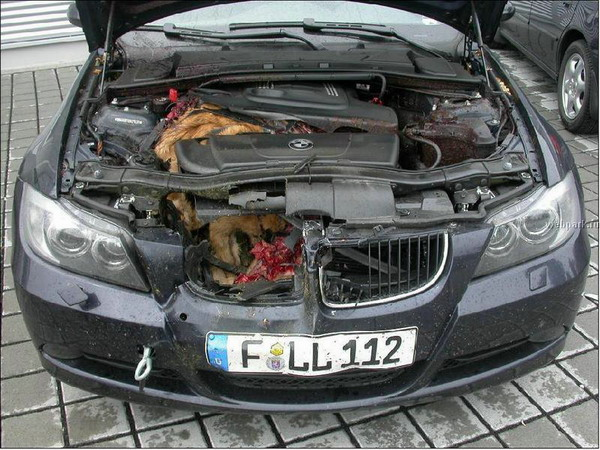
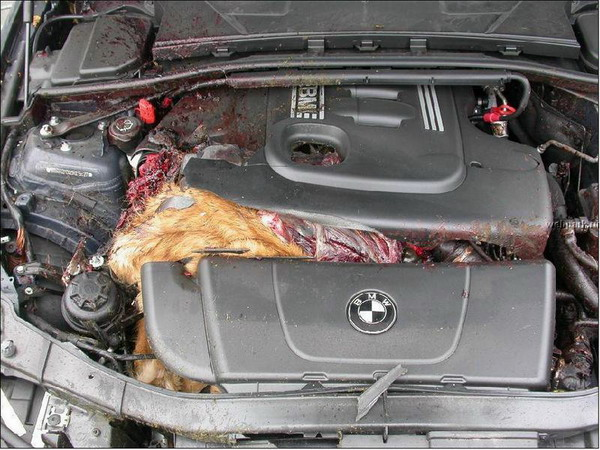
When a BMW hits a Kangaroo

I got this from a friend via email. The pictures look genuine, as far as I can tell. If you don’t want to see, don’t scroll down, OK?


Driving at 225km/h (that’s about 140 mph) out near Mitchell (Qld) in his BMW Z4 the Driver hit a  Kangaroo..
The kangaroo disappeared!
The driver stopped and wondered. Where did the kangaroo go?

Scroll  down to see what he  found……
If you don’t want to see, don’t scroll down.

What I’m Reading: The Wrong Guy by Claudia Teal Whitsitt

In 1969 Katie, a girl from a large, poor, conservative
catholic family in Detroit sets off to college at Eastern Michigan University, and finds herself sharing a room with a more attractive, sexually active, upper class Janie. The action takes place just after  seven murders of young, female college students in the area around EMU – an actual real-life series of killings that Whitsitt uses as the backdrop for the story. Police have arrested the supposed killer, but one of the murders was different to the other six, and some are concerned a killer may still be on the loose.

The book uses lots of contrasts between Katie and Janie to remind us of what was going on in a period of social upheavel. The book is full of references to the culture of the 60s: changing beliefs about sexuality, songs like Aquarius by The Fifth Dimension, Karen Carpenter, Catch 22, orange furniture and smoking being considered sexy. It’s hard to imagine the world of race riots in Detroit, when army tanks rolled down the streets of one of America’s largest cities, or when whites and blacks didn’t mix socially, even on a progressive college campus. The
main character does end up in danger, but I won’t give away the ending. The prose is vivid, the writing style is fluid and it’s a good week-end read. Here’s a link:

http://www.claudiawhitsitt.com/2011/01/the-michigan-murders-and-the-wrong-guy/

Conflict in “The Other Boleyn Girl.”

(If you’re looking for my post on the Afghan woman Malalai Joya, who was expelled from the Afghan parliament for speaking out about corruption, and violence against women, scroll down. I’ll post more on her when I’ve finished her book.)

Conflict in“The Other Boleyn Girl.”

I’ve been meaning to write something on this for some time.  How does Philippa Gregory keep the conflict going in “The Other Boyne Girl’?

She has at least the following conflicts going.

1-The Boleyn family want Anne to become King Henry’s lover, but she is opposed to this idea (at first).

2-She secretly weds Henry Percy, and her family and Cardinal Wolsey  force her to make out the marriage never happened.

3-The Boleyn family are always afraid that the Seymour family will put  one of their girls ‘in front of king Henry,’ and the Boleyn family may lose their hopes of advancement.

4-King Henry needs a male heir and Queen Catherine keeps having miscarriages, sons
that die in infancy, or once, a live daughter.

5-Anne Boleyn urges Henry to break with the Pope and form the Church of England.

6-Anne refuses to give herself sexually to Henry until he promises to make her queen,
but has to keep him interested, while not giving in to him.

7-Anne and her sister Mary end up as rivals for the King’ affections, with Henry still pursuing Anne even after Mary has just given birth to Henry’s illegitimate child.

8-Mary and Anne fear for the life of their brother, George, because he is homosexual and this may lead to his death. (It does).

9-Mary becomes disenchanted with life at court, and wants to live a simple life in the
country.

10-Their brother George is force to marry Jane Parker, for whom he feels nothing.

11-Queen Catherine knows that the Boleyn girls are betraying her and fears that Anne may have her poisoned.

12-When Anne finally becomes queen, mobs heckle her in the street and she has to return up the Thames in fear of her life.

13-Finally, after Anne fails to produce a son, she ends up in the Tower of London, taking Mary’s daughter with her as a lady-in-waiting, much to the distress of Mary.

And those were just the thirteen I could think of without re-reading the book. I wonder
what more I’ll find a a second read?

Being a woman and speaking out against corruption in Afghanistan

Sat 3 Sept 2011
Tonight I heard a woman who inspired me by her courage and her persistence. I went to the Melbourne Writers Festival to hear Malalai Joya, an Afghan woman who was elected to parliament in 2005, and expelled in 2007 for criticising the presence people she described as warlords and war criminals in the Afghan parliament. She has survived four assassination attempts. This going to be a very rough and inadequate first draft of this blog entry, because I’m writing it straight after returning from listening to her speech, and I will need to Google a lot of the names and groups she mentioned, since I can’t speak Pashto and don’t know the correct spellings. Look forward to a better version as I Google and read her book “Raising My Voice”.
She claimed that a lot of the ‘foreign aid” being channelled into Afghanistan is ending up in the pockets of tribal warlord and not helping ordinary people. She spoke of gang rapes committed by groups in police uniforms. And who do you complain to? The courts are run by people who are interlinked with the same warlords and religious factions that commit crimes in the first place. She described families selling babies for $10 because they couldn’t feed them. Some in the Afghan parliament, she said, were puppets of Iran, including the Minister for Electricity and Water (I couldn’t get his name down as I couldn’t get the pronunciation).
She said that the US and NATO had “pushed us from the frying pan (the Taliban) into the fire (tribal warlords.)”
She had a lot to say about the Taliban being invited to join the Afghan government for the sake of “National Unity” – and she didn’t like it.
I’ll blog more on this as I read her book.
Her Wikipedia entry is here:
http://en.wikipedia.org/wiki/Malalai_Joya
Her book is sold under two titles in English-speaking counties: “A Woman Among Warlords” in the US and Canada, and “Raising My Voice” in other English-speaking countries
More to follow as I read the book.

Paper sculptures by Canadian artist Calvin Nicholls

I was sent these photos in an email:

Beautiful Paper Sculptures by Calvin Nicholls

Description: paper sculptures

Canadian artist Calvin Nicholls creates the following amazingly beautiful sculptures using sheets of paper. “Calvin has been creating his paper sculptures since 1986 from his studio north of Toronto Ontario, Canada. Working with sheets of paper and a scalpel, he cuts the component pieces to fit the final drawing and assembles the low relief artwork under studio lighting. When the sculpture is complete the lighting is adjusted to bring out the subtle form and texture. A large format camera is used to capture the detail on 8×10 film prior to scanning for print applications or art prints.”

Description: paper sculptures

Description: paper sculptures

Description: paper sculptures

Description: paper sculptures

Description: paper sculptures

Description: paper sculptures

Description: paper sculptures

Description: paper sculptures

Description: paper sculptures

Description: paper sculptures

Description: paper sculptures

Description: paper sculptures

Description: paper sculptures

Description: paper sculptures

Description: paper sculptures

Description: paper sculptures

Description: paper sculptures

Description: paper sculptures

Description: paper sculptures

Description: paper sculptures

Description: paper sculptures

Famous insults

A collection of famous insults:

The exchange between Churchill & Lady Astor (the first female Conservative MP):
She said, “If you were my husband I’d give you poison.”  He said, “If you were my wife, I’d drink it.”

Also to lady Astor:

A dinner party where Churchill is greatly enjoying his wine and not greatly enjoying  Lady Astor’s company.

Lady Astor:Mr. Prime Minister, you are  drunk!

Sir Winston: I am, Madam. But you are ugly The difference is that in themorning I  shall be  sober.

A member of Parliament to Disraeli:
“Sir, you will either die on the gallows or of some unspeakable disease.” “That depends, Sir,” said Disraeli, “whether I embrace your policies or your mistress.”

“He had delusions of adequacy.” – Walter Kerr

“He has all the virtues I dislike and none of the vices I admire.” – Winston Churchill

“I have never killed a man, but I have read many obituaries with great pleasure.”  Clarence Darrow

“He has never been known to use a word that might send a reader to the dictionary.” – William Faulkner (about Ernest Hemingway).

“Thank you for sending me a copy of your book; I’ll waste no time reading it.” –Moses Hadas

“I didn’t attend the funeral, but I sent a nice letter saying I approved of it.” – Mark Twain

“He has no enemies, but is intensely disliked by his friends..” – Oscar Wilde

“I am enclosing two tickets to the first night of my new play; bring a friend…. if you have one.” – George Bernard Shaw to Winston Churchill
“Cannot possibly attend first night, will attend second…. if there is one.” – Winston Churchill, in response.

“I feel so miserable without you; it’s almost like having you here.” – Stephen Bishop

“He is a self-made man and worships his creator.” – John Bright

“I’ve just learned about his illness. Let’s hope it’s nothing trivial.” – Irvin S. Cobb

“He is not only dull himself; he is the cause of dullness in others.” – Samuel Johnson

“He is simply a shiver looking for a spine to run up.” – Paul Keating

“In order to avoid being called a flirt, she always yielded easily.” – Charles, Count Talleyrand

“He loves nature in spite of what it did to him.” – Forrest Tucker

“Why do you sit there looking like an envelope without any address on it?” – Mark Twain

“His mother should have thrown him away and kept the stork.” – Mae West

“Some cause happiness wherever they go; others, whenever they go..” – Oscar Wilde

“He uses statistics as a drunken man uses lamp-posts.. . for support rather than illumination. ” – Andrew Lang (1844-1912)

“He has Van Gogh’s ear for music” – Billy Wilder

“I’ve had a perfectly wonderful evening. But this wasn’t it.” – Groucho Marx