Today I’m not going to say anything about economics or politics. Promise. Kristen Lamb’s blog (http://warriorwriters.wordpress.com) has an excellent article headed “Taking Your Novel From Good to Great” which contains a guest blog by Danielle Poiesz about the website “bookcountry.com”. Book country is a site where authors can upload books (or drafts) and get comments and feedback from other writers or readers. There are sections related to specific genres, articles about the business side of writing, and articles of advice by authors. One, by Jamie Freveletti, has “Ten Tips I Received… and sometimes Ignored.” It opens with the quote “Persistence is the only thing that has the ability to move you closer to being published. The first tip is “write every day.” She doesn’t, she admits: how could you raise kids, work as a lawyer, and write every day? But she says even under those conditions she managed to write every other day. Boy! That’s a mighty feat. It reminds me of a quote attributed to American President Calvin Coolidge about persistence and determination alone being omnipotent. One of the reassuring things in Freveletti’s article is that her first book didn’t get published, and that’s not uncommon. Well, I guess this entry ended up being more about book country than Kristen Lamb. But check out Kristen Lamb’s site. Apart from her own articles, she has lots of useful links to other sites and blogs. Best wishes.
Category Archives: Uncategorized
Politics, Money and Personal Abuse.
My last post on “Why aren’t more Americans more visibly angry?” drew a few responses.
Tameri says “I am totally pissed at where our country is right now … (but I) desperately want to believe that (politicians) genuinely have our best interests in mind when making decisions.” She concludes with “I’m pissed, but feel impotent to change anything. What would you suggest we do?”
Rissa points out that no one forced people to take out mortgages they couldn’t afford and then draw down equity to buy “a boat or some other expensive plaything… Where is the outrage at their part in crashing the economy?”
Valerie (garagesalefinder) posted a fairly punchy reply. She says “I believe quite the opposite of Tameri about our elected officials. I don’t believe most of the politicians have our best interests at heart. I believe they have their own self-interest in mind with the decisions they make.” She is upset at the influence of lobbyists and says about politicians, “for the most part, if you have enough money behind you, you can spend your way into office. That tends to make them susceptible to influence by rich lobbyists.” She adds, “I find it fascinating that nobody is protesting in Hollywood outside the studios where top actors make tens of millions of dollars for a few months of work. Or protesting outside stadiums where athletes are paid millions of dollars for playing games.”
Cheryl says, “Since the protesters [the occupy Wall Street groups] are standing up against the very corporations who have bought and paid for both sides of the government, through lobbying and political donations, they’re not likely to find much sympathy with the politically motivated media.” And she wants lobbyists and corporate funding of politicians outlawed.
Andrew asks why he should care about the distribution of wealth. “If you redistribute that wealth, what do we get?” (The figure of 1.5 trillion – Forbes estimate of the wealth of the top 400 in the US – were spread over 150 million people would be $10,000 per person. Not that such a redistribution is politically possible, even if a society could actually reach agreement on such a thing.
Where should a discussion like this go?
Let’s look at two problems my writers have identified.
It seems odd that Americans who are left-leaning believe the media are controlled by large companies (and hey, they don’t get any bigger than News Corporation) while those who are right-leaning believe that the ‘liberal media’ distort the news leftward. On the face of it it’s hard to imagine the media as a whole being left leaning. After all, if newspapers and television stations aren’t owned by large corporations, who are they owned by?
I lament the fact that what should be intelligent coverage and debate over national issues is trivialised and turned into entertainment, where professionally indignant shock jocks simply make provocative statements and then insult and talk over the top of listeners or viewers who disagree with them . The level of debate in politics in Australia is lamentable. Ten second sloganistic sound bites rule the media. And I don’t see much higher level of debate in Britain or the US. Sorry to anyone who feels offended at that.
If there is to be intelligent debate about issues, I suspect it has to take place on the internet, free from the domination of corporations that own the TV stations and newspapers. BUT, on the internet too much discussion about political issues just turns into personal abuse, with posters on many forums giving no sources for their alleged facts. Too many posts in blogs and websites turn into ‘you’re a socialist liberal communist / right wing repiglican asshole’ (or insert whatever insult the writer feels happy with.)
Somehow, some of us have to make a conscious effort to engage in debate without descending into personal abuse, and start to cite sources for our facts, and concede that there might be possible arguments against our own positions.
We need to recapture the notion that political debate is something more than name calling.
Perhaps the replies that resonate the most with me are Valerie’s and Cherly’s comments on lobbyists and money in politics. It seems that to make it thru a primary election season in the US a politician has to be independently wealthy, or get a lot of donations from large corporations. Five of Obama’s top 20 campaign donors in 2008 were Wall Street banks. (I didn’t know this until last month, but the information is easy to find once you google it. Look for the “opensecrets.org” website and the Centre for Responsive Politics” ) Somehow, those of us in democratic countries need to be pushing for laws that aren’t in the interests of the people who would need to enact them. That’s a tough ask.
But somehow a groundswell of public opinion needs to be created that says ‘NO, it is NOT OK for Goldman Sachs to donate $1 million to a political candidate.”
Any thoughts on how this can be done?
The friendliness of strangers.
I was at university today, sitting on one of the benches outside the library, just in front of the window of a café that’s in the library. I had a notepad out and was working on a stats problem.
A young guy and girl approached me and said “Excuse me sir, can we get you coffee?” (Who calls strangers “sir” in Australia? America, yes. But here?) I thought they must be… from the café trying to drum up business, so I asked. “No, we just noticed you working here and we wanted to buy you a coffee.” I was a bit perplexed. I wondered if I looked like I couldn’t afford a coffee. (I was wearing a pair of jeans that are a bit faded and had ink stains where a biro leaked in the right side pocket. Maybe I’m dressing too down-at-heel.)
There had been a TV show here in Australia recently that said the way to happiness included practicing random acts of kindness. I asked, “Are you doing random acts of kindness?” “We just want to buy you a coffee. What do you have?” I figured “What the hell – why not?” and said, “A latte.” They disappear. I wonder if once they get the coffee they’ll want to start talking about Jesus and I’ll be captive because I’ve accepted the coffee. They come back with a latte. Then we start talking. He looked vaguely familiar. It turns out she’s in the same calculus lectures as me, and he sits in just to be with her. She’s Ermina and he’s Tom. We start talking. They don’t want to talk about Jesus.
She tells me she’s born in Bosnia and her family fled to Germany when Yugoslavia disintegrated. We talk about her family’s life there and here. Her dad’s doing an economics degree at the same uni. Her family were Muslim, but she doesn’t wear the garb.
She tells me how after she was born, her mother tried to register her birth. The fighting had just started. For seven days, the officials at the registry office wouldn’t register her birth because they couldn’t agree on what to put on the heading of the certificate. Yugoslavia? The Republic of Bosnia? Or is it Bosnia and Herzegovina? But without a birth certificate the mother can’t get the daughter added to her passport, and they can’t get the child out to Germany.
Finally someone makes a decision on what the letterhead should read. Her birth certificate is now stored somewhere safe. If she loses it she may not get another. They’re just two likable twenty-somethings who were happy to have a conversation with a fifty-something. The world feels nicer today. After the next lecture, I must buy them a coffee.
Speaking up for women in Afghanistan. A remarkable story.
I’ve been reading “Raising My Voice” by Malalai Joya, an Afghanistan woman who was expelled from the Afghan parliament in 2007 for criticizing the presence of warlords. When she was only a few months old, her family had to flee to Iran while her father fought the soviet occupation which began in 1978. She grew up in refugee camps in Iran and Pakistan. Iran did not let girls in the camps go to school, and her family eventually moved to Pakistan to a town that had a girl’s
school. She intersperses her own story with bits of recent Afghan history: how the CIA funneled money into mujaheddin groups chosen on the advice of Pakistan’s intelligence services. When the soviets were defeated many of the groups began fighting each other for power.
In ninth grade she became a school teacher, which gives us some idea of the level of education of many of the other women she was teaching; in a word, ZIP.
At sixteen, having completed year 12, she returned to Afghanistan. The Taliban were in power. Girls were not allowed to go to school (again!) and she began a girls’ school in a basement of sympathetic householder, teaching women the unthinkable: how to read and write. She smuggled books in under the Burqa she was forced to wear in the streets. (In an amusing aside she describes how you eat ice cream while wearing a Burqa: with great difficulty.) The Taliban forbade music and films,
but copies of the movie Titanic circulated among people who secretly had video players. Street vendors began naming their products after the film: Titanic shampoo, Titanic onions, Titanic potatoes. But the world is an even stranger place than most of us would imagine. Even as late as May 2011, America paid the Taliban $43 million as a reward for limiting opium growing. (Seriously! Just Google it.)
I’ve noticed that although there are a lot of references to Islam in the book, Joya doesn’t speak about her own religious beliefs or whether she has any. Unlike ‘I am Najood, Aged 10, divorced,’ (reviewed on one of the pages at the top of this blog) she doesn’t claim to draw strength from her religion. Nor, like Aayan Hirsi Ali in ‘Infidel” (also reviewed above) does she describe a religious period in her teenage years, followed by disillusionment. Here are no references (so far) to her visiting a mosque for religious purposes, or praying by herself.
So far I’m only up to page 100, where she has been expelled from the Loya Jirga (the council that was to frame the Afghan constitution in 2003.) I know she gets elected to the parliament in 2005, and expelled from that later in the book. So I’m waiting to see what else happens.
I’ll do another post by next Friday. For more – Wikipedia has an article on her. This book is published as “A Woman Among Warlords” in the US and Canada, and “Raising my Voice” in other English-speaking countries.
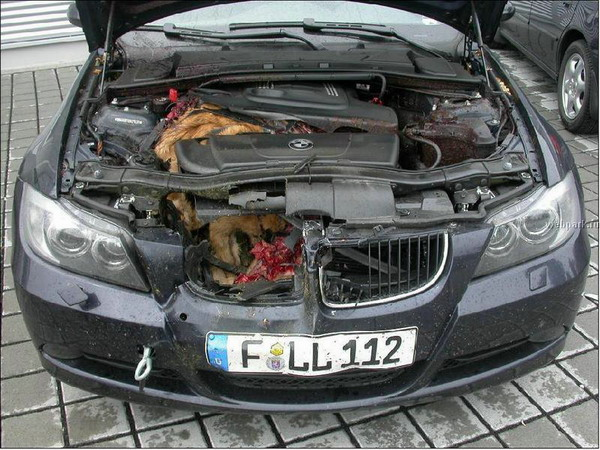
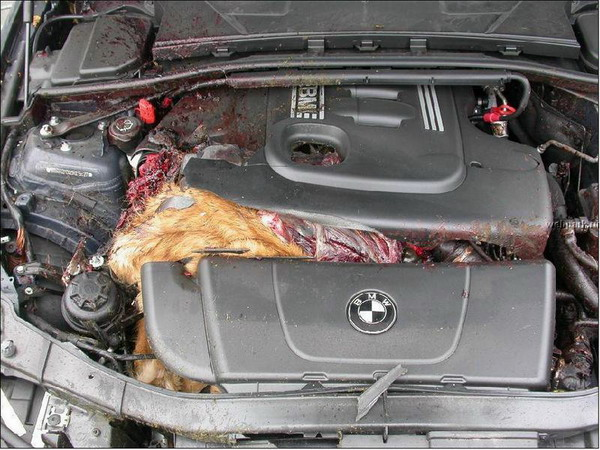
When a BMW hits a Kangaroo
I got this from a friend via email. The pictures look genuine, as far as I can tell. If you don’t want to see, don’t scroll down, OK?

Driving at 225km/h (that’s about 140 mph) out near Mitchell (Qld) in his BMW Z4 the Driver hit a Kangaroo..
The kangaroo disappeared!
The driver stopped and wondered. Where did the kangaroo go?
Scroll down to see what he found……
If you don’t want to see, don’t scroll down.



Some nice photographs of New York
This blog was in “freshly pressed” on wordpress. Lovely photogrpahs where he gets some things in focus and others deliberately out of focus.
http://jonathanfleming.wordpress.com/2011/09/13/walking-the-high-line/
What I’m Reading: The Wrong Guy by Claudia Teal Whitsitt
In 1969 Katie, a girl from a large, poor, conservative
catholic family in Detroit sets off to college at Eastern Michigan University, and finds herself sharing a room with a more attractive, sexually active, upper class Janie. The action takes place just after seven murders of young, female college students in the area around EMU – an actual real-life series of killings that Whitsitt uses as the backdrop for the story. Police have arrested the supposed killer, but one of the murders was different to the other six, and some are concerned a killer may still be on the loose.
The book uses lots of contrasts between Katie and Janie to remind us of what was going on in a period of social upheavel. The book is full of references to the culture of the 60s: changing beliefs about sexuality, songs like Aquarius by The Fifth Dimension, Karen Carpenter, Catch 22, orange furniture and smoking being considered sexy. It’s hard to imagine the world of race riots in Detroit, when army tanks rolled down the streets of one of America’s largest cities, or when whites and blacks didn’t mix socially, even on a progressive college campus. The
main character does end up in danger, but I won’t give away the ending. The prose is vivid, the writing style is fluid and it’s a good week-end read. Here’s a link:
http://www.claudiawhitsitt.com/2011/01/the-michigan-murders-and-the-wrong-guy/
Impossible photos
Here are some of the cleverest phots I’ve ever seen: Impossible pictures by Erik Johansson
Conflict in “The Other Boleyn Girl.”
(If you’re looking for my post on the Afghan woman Malalai Joya, who was expelled from the Afghan parliament for speaking out about corruption, and violence against women, scroll down. I’ll post more on her when I’ve finished her book.)
Conflict in“The Other Boleyn Girl.”
I’ve been meaning to write something on this for some time. How does Philippa Gregory keep the conflict going in “The Other Boyne Girl’?
She has at least the following conflicts going.
1-The Boleyn family want Anne to become King Henry’s lover, but she is opposed to this idea (at first).
2-She secretly weds Henry Percy, and her family and Cardinal Wolsey force her to make out the marriage never happened.
3-The Boleyn family are always afraid that the Seymour family will put one of their girls ‘in front of king Henry,’ and the Boleyn family may lose their hopes of advancement.
4-King Henry needs a male heir and Queen Catherine keeps having miscarriages, sons
that die in infancy, or once, a live daughter.
5-Anne Boleyn urges Henry to break with the Pope and form the Church of England.
6-Anne refuses to give herself sexually to Henry until he promises to make her queen,
but has to keep him interested, while not giving in to him.
7-Anne and her sister Mary end up as rivals for the King’ affections, with Henry still pursuing Anne even after Mary has just given birth to Henry’s illegitimate child.
8-Mary and Anne fear for the life of their brother, George, because he is homosexual and this may lead to his death. (It does).
9-Mary becomes disenchanted with life at court, and wants to live a simple life in the
country.
10-Their brother George is force to marry Jane Parker, for whom he feels nothing.
11-Queen Catherine knows that the Boleyn girls are betraying her and fears that Anne may have her poisoned.
12-When Anne finally becomes queen, mobs heckle her in the street and she has to return up the Thames in fear of her life.
13-Finally, after Anne fails to produce a son, she ends up in the Tower of London, taking Mary’s daughter with her as a lady-in-waiting, much to the distress of Mary.
And those were just the thirteen I could think of without re-reading the book. I wonder
what more I’ll find a a second read?
Photos at La Trobe Uni (for the article on the Afghan member of parliament Malalai Joya, scroll down)