Zero Dark Thirty: a hard film to review

Zero Dark Thirty is a hard film to review. It deals with an important issue in recent US history. It’s well photographed, the settings are realistic, and some of the details are technically interesting. But most of the characters are not very likable  and there has been a lot of controversy over its depiction of torture.

Zero Dark Thirty movie poster from Wikipedia

One of the films major flaws is the lack of likable characters. The female lead, Maya (Jessica Chastain), is single-minded and dogmatic. Being obstinate and dogmatic can be a good thing when you’re right, but a bad thing when you’re wrong. Fortunately for her, luck – and some clever guess work – were on her side. But the viewer doesn’t feel a great deal of empathy for her. She appears to have no friends, no contact with any family (if she has one)  and no activities outside of her work.

The most likable character in the film was Maya’s fellow officer Jessica, who was killed as she waited to meet a terrorist who had supposedly agree to work with the US. As the terrorist and his driver arrive, they blow up their car. (This based a on a real incident in  2009 at Camp Chapman.)

The photography is excellent. The film does convey  the sense of isolation the Americans must have felt working in these remote, fortified dust bowls. The settings looks realistic: parts of the film were made in India, with certain buildings altered to make them look as though they were filmed in Pakistan.

The tension builds throughout the film as we are shown the bombings in London  and  Madrid, which give a sense of the pressure the main characters must have felt as they tried to find clues to the next likely terrorist attack against the world.

The film implies that torture helped capture bin Laden. The clam that usable information was actually obtained by torture is disputed by many politicians and intelligence officers. Here’s a section from Wikipedia quoting several senior US officials disagreeing about the usefulness of torture:

“In 2012, after three years investigating the CIA’s interrogation program, several officials, including U.S. Senators Dianne Feinstein and Carl Levin, the chairmen of the Senate Intelligence and the Senate Armed Services Committees, respectively, have said that claims that critical information has been obtained through waterboarding are untrue.  But, Leon Panetta, Secretary of Defense, said in February 2013 that critical information was obtained through waterboarding. U.S. Senator John McCain, who was tortured during his time as a prisoner of war in North Vietnam, said upon watching the film that it left him sick — “because it’s wrong.” In a speech in the Senate, he said that, “Not only did the use of enhanced interrogation techniques on Khalid Sheikh Mohammed not provide us with key leads on bin Laden’s courier, Abu Ahmed, it actually produced false and misleading information.”

It’s hard to say if the film should have included torture scenes or not. If they had been not shown, the producers would have been accused of “whitewashing history.” As it is, they have been accused of producing a film that justifies torture. The problem with torture is that once you say ‘yes’ to using torture on a known terrorist to get details of a the next possible attack, where do you stop? What about the guy who is a strong suspect? A weak ‘possible’ suspect? A guy who you don’t think is a terrorists but who knows something about people who may be? And if ‘yes’ to terrorists, would you torture a serial killer suspect like Ted Bundy, while he was still only a suspect? And after that, who?

Overall, the film well made, well acted, and has been nominated for several Oscars. If it wins, the controversy about its depiction of torture will flair again. Is it a “must see” film? No. For all the interesting detail about how bin Laden was tracked down, the film remains a technically well-made film about a group of people it’s just hard to like.

So, has anyone seen the film? What did you think?
Would North Korea really fire a missile at the US?

This week North Korea had a mental spasm. They decided to test anther long-range missile, and said it was aimed at the United States. Some Americans I know got very concerned. Could the North Koreans really attack the US?

How North Korea behaves

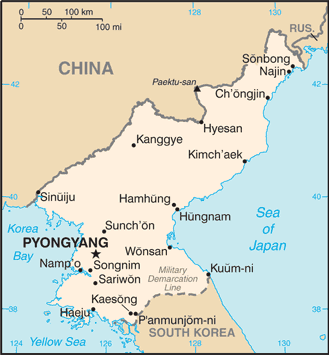
Map of North Korea from CIA Fact BookNorth Korea spends about 40 per cent of its GDP on military expenditure, while the common people are impoverished. It has enriched uranium, and conducted underground nuclear tests. Every time the North Koreans chuck a mental, a six-country conference meets to hammer out the problem: the US, China, Russia, North Korea, South Korea and Japan.  Often they provide food aid and oil to North Korea, in exchange for them scaling back their nuclear programs. The US has frozen and unfrozen various assets of North Korea abroad, as North Korea has cooperated or not with international pressure to cease their nuclear program.

North Korea, China, and the US

I’m speaking now as an ex-economist  of 25 years, who is now studying politics part-time. It’s a current belief among economist and people involved in political science that major trading partners don’t tend to go to war with each other, since the outcome is bad for both of them. It’s like cutting of you own nose to teach your face a lesson. Both parties lose. This was part of the principle between the integration of the French and German coal, iron and steel industries at the end of WWII, which ultimately lead to the free trade zone in Europe.

China is North Korea’s major financial benefactor.  Although the US is concerned about China’s build-up of fleet, (e.g., a Chinese aircraft carrier on the way), China and the US are becoming more economically linked to each other and are developing a “Siamese twin” relationship. The US imports a lot from China, and the Chinese hold about one and a half trillion dollars’ worth of US government bonds (about 11 per cent of the total.) The Chinese don’t want the value of their US government bonds to be degraded, (which seemed possible during the debt ceiling debate of 2012,) and which would happen in a new US war, since any new war  would lead to even bigger budget deficits than the US already has, and lower the value of their bonds. Strange as it may sound, the Chinese want the Americans to fix their budget problems, and said so during the debt-ceiling crisis. At the same time, the US needs to keep importing manufactured goods from China, since they would be more costly if made in the US. China doesn’t want an armed conflict with the US over Korea.

But what happens if the North Koreans really were to make a strike at the US? If the North Koreans provoked the US to the point where the US took some type of military action against them say— airstrikes on their military facilities—this might destabilize the regime, and the results could be anybody’s guess.

It’s not in China’s interest for there to be a major armed conflict between the US and North Korea. If there were major destruction in N. Korea, China would probably get a major influx of North Korean refugees, which they presumably wouldn’t want.

If the North Korean state collapsed, the re-unified Korea would probably be allied with the US, which China also wouldn’t want.

At the same time, South Korea wouldn’t want a disorderly disintegration of North Korea, since some sectors of the North Korean Military may not be under anyone’s direct control while that happens.

Japan

Some refugees may end up in South Korea, or Japan. The Japanese sure as hell don’t want North Korean refugees. In the 1980s and 90s, there was a major political tension between North Korea and Japan. The North Koreans had been kidnapping Japanese citizens off isolated beaches, and taking them to North Korea to teach Japanese language and customs to North Korean spies. North Korea denied it. The issue helped destroy the career of Takako Doi, the first female head of a Japanese political party, (the Socialists). Doi nailed her colors to mast in defending the North Koreans and supporting their denials of these accusations. When North Korea finally confessed it did have kidnapped Japanese in North Korea, Doi’s career was severely damaged. Japan doesn’t really like the Chinese and Korean minorities they already have, and they wouldn’t want any more.

Russia

Last I heard, Russia was building a railway line from Khasan in Siberia to the North Korean port of Rajin, to export more easily to counties around Korea. Therefore, the Russians wouldn’t want a conflict between the US and North Korea, or the disintegration of the North Korean state, since it would mess up their nice new trade corridor.

So what’s stopping a war?

The North Koreans know that if they behave provocatively every so often, then promise to be good, other countries give them oil and food for a while. Then they go back on their promises and do it all again.  But there are powerful forces around them who are likely to hold them back from committing suicide by attacking the US. No one wants the chaos the refugees and the possible military realignment that would follow if North Korea collapsed. I suspect that North Korea knows this, which probably gives them some feeling of safety: while their government is reprehensible, too many people have a stake in it not collapsing. This kind of gives the North Korean leadership a licence to behave provocatively up to a point, without fear of consequences.

All up, I think North Korea may talk crazy from time to time, but there are powerful forces that would keep their behavior in check. I doubt they are really going to fire a missile at the US. It might be the end of their food and oil aid.

So, have any of you got any impressions of North Korea? Has anyone lived in South Korea or China and heard this topic discussed? Did you hear about their threat to fire a missile at the US? What do you think?

Hitchcock: impossible to live with, but worth the effort

How do you live with a man who is extremely talented, perhaps a genius, but who is insecure, resentful, often dismisses you, puts you down, is a peeping tom and seems determined to prove that everyone else in his industry  is wrong?

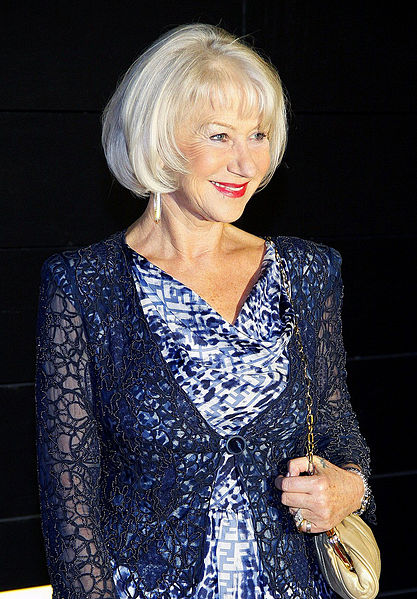
Helen Mirren, from Wikimedia Commons

In Hitchcock, staring Anthony Hopkins and Helen Mirren as his wife Alma Reville, Hitchcock believes the Hollywood film industry want him to make the same kind of film over and over again, so he chooses as his next project Psycho, based on a book about a serial killer (Ed Gein) who kept his dead mother mummified, and killed attractive young women who came to his motel. It was 1959, and Hitchcock proposed showing a woman being stabbed to death in the shower, and evidence being flushed down a toilet. Back then, cinema just didn’t show those things. Everyone is against the project.

These are the twin themes in this film: Hitchcock’s determination to prove the industry wrong, and the effects on Reville of a living with a man who most of us would think was  impossible to live with.

The first theme begins when Hitchcock is asked at the premier of his latest movie, North by North West, whether he is too old to continue making movies and should just retire.  As she hears the question, Reville freezes. We can see how deeply she knows the question will hurt Hitchcock.  Hitchcock sets out to prove everyone wrong, but chooses a project which nobody will fund. When the studios won’t finance the film, Hitchcock mortgages their house and tells Reville that if it doesn’t work out they’ll be eating crow for a long time. In fact, they’ll probably lose their house and may become bankrupt.

The filming is soon behind schedule, and Hitchcock doubts whether the still ‘has it.’  Reville also has doubts, which are implied, but not directly voiced. As the film progresses, Hitchcock’s doubts grow, until he refers to the film as being ‘stillborn.’

The second theme revolves around Hitchcock’s  constant overeating and drinking, his obsessing over actresses that he could probably never attract, his lechery (in front of his wife) and his suspicions of Reville’s relationship with a fellow writer, Whitfield Cook. As Cook and Reville work together on one of Cook’s scripts,  Cook tells Reville that a lot of great men are “impossible to live with, but worth the effort.” Eventually Hitchcock accuses her of having an affair with Cook, at which point Reville gives Hitchcock a blast over the time she spends supporting him, and the little recognition or gratitude she gets for any of it. After they have a reconciliation of sorts, Reville turns her energies into helping Hitchcock “whip Psycho into shape.”  When  Paramount Pictures decides to release the picture in only two cinemas, Hitchcock comes up with an ingenious plan to get the film the publicity it needs. It went on to be regarded as one of his best films.

The acting in this movie is superb – especially that of Helen Mirren as Reville. In many scenes the main emotional impact is conveyed merely by the  expressions on Reville’s face, without the need her to say anything. If Mirren doesn’t get an Oscar for this, I’ll be very very surprised.

This film is well worth the money. If you haven’t seen it, I hope you’ll consider it.

So what did you think of Hitchcock and his films? Do you have a favorite   Could you have lived with a man like that? And did you ever watch the original of psycho? I’d love to hear what you think.

Note: this is my blog site. For information about my novel, click here. For information about editing an academic thesis, click here.

Crazy Japanese religious cults: how I got the idea for my first book

Today I thought about why I used the Japanese religious cult “Aum Shinrikyo” as the starting point for my first novel. My ex-wife and I stopped in Japan on our way back from Europe in 1985, and we visited Tokyo, Kyoto and Hiroshima. I loved the place. The train system was fantastic, the country was full of old temples with beautiful architecture, and it was easy to get around even though we didn’t know the language.

Kyoto in autumn, from Wikimedia Commons by Wikimedia user  FG2
Kyoto in autumn, from Wikimedia Commons by Wikimedia user FG2

In between about 1988 and 1997 l learned Japanese on-and-off in evening classes. My ex- and I started home-hosting Japanese visitors and Japanese students from nearby La Trobe University. In 1989 and in 1994, I visited again, only this time on my own. I stayed with Japanese friends.

The year after my 1994 visit, the Japanese religious cult Aum Shinrikyo released Sarin nerve gas in the Tokyo subway system. This event was a major shock to the Japanese people. They were not used to domestic terrorist groups engaging in mass killings in Japan. Soon everyone wanted to know: who are these people? The name Aum Shinrikyo means “Supreme Truth.” Their leader, Shoko Asahara, preached a mixture of Yoga, Christianity, Buddhism, and Nostradamus. He believed the end of the world was near. Don’t they all? He declared himself to be Jesus Christ. He used LSD and electric shock therapy on the group’s followers. Some were murdered.  Shoko was also big on conspiracy theories involving the Freemasons, the British Royal Family and the Jewish people. Yep, they were crazy as batshit. But the group had made a point of enrolling students from some of Japan’s top universities. They promoted themselves as the religion for the intellectual elite. After the gas attacks, Shoko and many of his followers were arrested.

When I stated my novel in the mid-1990s, I had a vague idea about a religious group mounting an attack on something in Australia. I asked: what if some of Shoko’s followers evaded arrest, invented a genetically modified virus, and threaten to release it at an international sporting event in Melbourne Australia. I invented a mini-Olympic Games that I called the “Pacific Games.” Setting the book in my own city seemed a pretty obvious thing to do. I could write scenes in Melbourne, and I had learned enough about Aum to visualize what they would do.

Sometimes I look at other writers and ask, “How did they get their idea?” How did Philip Hose Farmer get the idea to write Jesus  on Mars? (You guessed it: Earth detects some ancient Greek letters carved on a doorway into a mountain on Mars. They go inside and who do they find? Jesus and a bunch of guys following first century Judaism. I won’t spoil the plot.)

So, what’s the most unusual story idea you’ve seen in a book, and where do you think it came from?

I’d love to hear from you.

Note: this is my blog site.   For information about editing an academic thesis, click here.

My novel Fire Damage, an action thriller, is available on Amazon Kindle, here : the novel is based on the Japanese religious cult Aum Shinrikyo, which released Sarin nerve gas in the Tokyo subway system in the 1990s. If you don’t have a Kindle, you can download the app to read it on your computer or phone from here. For the paperback version, click here.

Sandy Hook: a few (respectful) questions for gun owners.

What happens when lawful gun owners have mentally ill family members?

Everybody, even in other countries, has been shocked by the mass killings in Sandy Hook. I have some reasonable, and I believe, perfectly respectful questions to ask on this issue.

Somebody suggested that the appropriate response to the Sandy Hook massacre was that everybody should do a random act of kindness to someone everyday. But how will that stop the next Nancy  Lanza, who has two hand guns, and an assault rifle, from having them taken off her by her mentally ill son (or brother or husband or father in law, or cousin who comes to visit) and have them used on her and then on others? [Later note: Nancy Lanza in fact had 6 guns in her house, and her son  killed her with her own gun, then took three of them to do the shooting.]

To keep guns out of the hands of mentally ill people, don’t you you need to check that the buyer hasn’t got a mental illness at the time of purchase, and then regularly review that every year or two? Most countries have annual renewals for car registration.  In New South Wales, Australia, cars over five years old have to have annual roadworthy checks.  Certain medical conditions can get you banned from driving.

People with guns and people with cars can both kill others. Should gun ownership be less stringently monitored and reviewed than car ownership?Should a system of regular re-registration be in place but with documentation from your doctor? (Has this person  developed a mental illness in the last year?) How could this be done?

Or what about other people in your household (Like Mrs Lanza’s son?) Wouldn’t the gun ownership need to be limited where anyone who is a regular visitor to you house has a mental illness? (Does anyone in your house have, or have they developed a mental illness?) This might also apply to people with mental disabilities. The shooter at the Port Arthur massacre here in Australia didn’t have a mental illness, such as paranoid schizophrenia, but did have a serious intellectual disability.

The questions aren’t being disrespectful to gun owners.

They are legitimate questions when the guns are bought legally by a person who is mentally fit at the time, but who may subsequently suffer a mental illness, or whose family members may acquire a mental illness, or where a family member has a significant intellectual disability. Should households in these cases be allowed to own a gun and if “yes” to one should that be “yes” to two or three guns? Is one hand gun enough to protect the average home from intruders? Are two or three? Is an assault rifle needed for that purpose?

Gun owners want to be protected for burglars other violent people. But how do we protect people like Mrs Lanza from the use of her own guns by a family member? After all, although she had the right to own a weapon, she had other rights too – rights not to be killed by her son. How is this right to be enforced?

Who’se looking out for the rights of the thousands of Mrs Lanzas out there?

So – I know many of you have strong feeling about gun ownership – pro and con- but if you accept that guns should stay out of the hands of mentally ill people, how do you deal with the situation of the multiple gun owner whose family member develops a mental illness.

Any thoughts?

Excellent advice on social media for writers

This blog post was by Kristen Lamb at warriorwriters.com. It’s one of the best blog posts I’ve ever read, and it’s about avoiding public fights and slanging matches on social media.


Author Kristen Lamb's avatarKristen Lamb's Blog

Happy Wednesday, everyone! Social media is becoming more and more a part of our everyday lives, and this means that we are coming into contact with more people than ever before. We do more socializing on Facebook than we do in person, but the impersonal nature of technology can get us into trouble if we aren’t careful.

The “impersonal” nature of Facebook is deceptive. Yes, we sit behind a screen and know people by monikers and avatars, but there are real people on the other side, so we need to take extra care to remember that.

We “Know” Others, but We Don’t KNOW Them

I go out of my way to always be positive on Facebook. Granted, I try and make sure I am “real.” I am not all fake buckets of sunshine, but I do respect the fact that we all struggle and most of us live in a…

View original post 1,566 more words

Good novel, if you don’t mind blood and guts

What I’m Reading This Week: Karin Slaughter’s ‘Blindsighted’. When I was a few chapters into this book, I started to wonder whether the author’s surname, Slaughter, was a pen name, chosen because she was writing a particularly gruesome series of murders. BS3I won’t go into all the details, but the first murder involved abuses of the victim’s body in a way I had not imaged ever happening. A short Google showed that Slaughter is in fact her real name. “I guessed I lucked out on that,” she said. Some of the material is based on research she did on real serial killers like Ted Bundy.  If she had been writing romances she would have had to change her surname. The book is well written, fast paced, the characters are believable, and it’s well researched. The conflicts that go on in a small town police department and medical examiner’s office, where everybody is friends with, or is related to, or an ex-partner of other characters in the book gives it an extra layer of emotional complexity that might be absent in big-city crime stories. It’s a good read, but only for those with a strong stomach.

Your TV is spying on you: Big Brother is coming

1984

Here are a few strange things I came across this week.

US company Verizon has applied for a patent  for a device that would allow a TV to monitor people in their living rooms, picking up sounds,  telling whether the occupants  are children or  adults, and whether they are having an argument. If it detected an argument, it might then should an advert for marriage counselling. If it detected the sound of gym equipment being used, it might show ads for fitness equipment or personal trainers.

The device would also be able to recognize the skin tone and guess the race of the person watching the TV. In the novel 1984, the government watched everybody through their telescreens in the name of Big Brother. If we thought Facebook and other computer applications were playing ‘big brother’ when they keep track of which websites we visit, so they can target ads to us, we haven’t seen anything yet.

Ellen DeGeneres told us Bic had a new line of “pens for women.” Seriously? The pens are supposedly designed to fit a ‘female hand,’ whatever that means.  They come in pink and mauve. I wonder who in the company thought this was a good idea. De Generes sends it up with a mock ad which is amusing.

A sixteen-year-old Norwegian kid downloaded an app onto his smart phone that mimicked the sounds made by dying rabbits. (The app was intended for people hunting foxes.) He and a friend thought it would be funny to put the phone in the middle of the road to see what happened. They did. A fox came, sniffed and nipped the phone, then picked it up in its mouth and made off with it. There’s a video here. The kid didn’t get his phone back.

If you stay on the page after the fox video, you can also see a video of an Albino Echidna, ( more or less an Australian hedgehog.) The commentary is in Swedish, but there’s an English explanation here .

Finally, a man  in Australia, was charged with cruelty to an animal (among other things) after he bit a police dog, which bit him back. The man had been arrested for breaching a restraining order, and began kicking the cage in the back of the police van. When police attempted to move him to another vehicle, he kicked and bit a police dog. The dog bit back, and the guy required stiches in his arm.

Does anybody have any strange news items they’ve come across? And how do you feel about  your TV set detecting your race, age gender, based on being able to recognize skin tones and voice types.  Is this going too far?

Should you be allowed to name your kid Adolph Hitler?

According to media stories,  a couple have named their baby girl, born 24 November 2012,  “Hashtag Jameson.”  The media stories about this are mostly British, so I’m guessing the baby was born there.  An Egyptian man has supposedly named his baby “Facebook” in memory of the role Facebook played in mobilizing people  in the revolution that overview the Mubarak regime last February. And in the 2005 book “Freakonomics,” Steven Levitt told of an American couple who allegedly named their kids Orangejello and Lemonjello.

Adolph Hitler – from Wikimedia Commons

Others have disputed that these children ever existed. Levitt’s study of how names move around America suggests that names start off in affluent areas gradually “trickle down” to become popular in the middle class, like Madison. But one LA Times  writer several years ago pointed out an academic study showing that the more unusual a child’s name, the more likely they were to end up in the juvenile justice system. It may not be the name that does it, tho.  The lower the educational and social status of the parents, the more likely they are to give their kids strange names.  And lower socioeconomic groups are over represented in the crime statistics.

Last year, a New Jersey couple who named  one child Adolph Hitler , and another Aryan Nation,  had all three of their children taken off them, immediately after the birth of the third. The authorities say it’s because of child abuse and violence, but the couple say it’s because of the names.

So what do people think? Do parents have a right to name their kid anything they like? Does the state have a right to protect a child from ridicule and abuse that it may get from having an offensive or ridiculous name? Does it have a right to prevent parents from giving the child a name that would offend many people (like Hitler).  Does a child have a right not to have a name that exposes them to ridicule or abuse, and if so, who sticks up for the child?

I’d love to hear what you think.

Note: this is my blog site. For information about my novel, click here. For information about editing an academic thesis, click here.

Skyfall well worth the money.

So, the new James Bond movie, Skyfall, opened in Australia. Why the opening here was two weeks later than America, and four weeks after Great Britain, I have no idea.  If you’ve like previous James Bond movies, you’ll like this one.

Skyfall poster

The stunt scenes are well done. In the opening scenes Bond chases a bad guy on a motor bike over the rooftops of the grand bazar in Istanbul, Turkey. He crashes trough roofs, ends up fighting on top of a moving train, gets shot, and falls into an icy river, all without getting his shirt untucked from his trousers.

The movie soon moves to Macau, where the photography has a golden lustre to it, which is quite stunning. At a casino, Bond falls into a pit with Komodo dragons in it, and fights his way out, again without his shirt getting untucked.

There are a few historical oddities in the film. When it moves to Bonds childhood home, the house has a “priest hole”: something that would be incomprehensible to those without a little knowledge of British history. During the protestant-catholic wars in England, catholic families often had hidden passages in which catholic priests could hide when the protestant authorities came to look for them.

The acting is good, although the scene where the parliamentary committee interrogates Judy Dench suffers from stilted, clichéd dialogue. Daniel Craig is still young enough to stay fit enough to play in another Bond movie or two. And as long as James Bond continues, the new Eve Moneypenny has a bright future ahead of her.

Go see it. It’s worth the $17.

For an experienced intelligence operative’s view of some of the mechanics and tricks used in the film, see the review in http://piperbayard.wordpress.com/  and scroll down a few entries: They were able to write their review two weeks before mine because of the opening dates.

Just another WordPress.com site