I studied Economics at La Trobe University (getting a BEcHons and MEc). I was writing for newspapers, mostly on personal finance, from 1997 to 2006, part-time, while working as an Economist at Victorian Department of Treasury and Finance, and later as an Associate Lecturer at La Trobe university. I have a stock of older, published newspaper articles at http://richardsnownewspaperarticles.wordpress.com
Churches and christians often get a bad rap over their responses to gay people. And historically, that bad rap has often been deserved. But every so often you find an individual with compassion who is prepared to come out against the historical positions of the church. Here a father talks about the chances that one or more of his kids may be gay. It’s worth reading. There is hope for the world. 🙂
I’m not sure if other parents think about this, but I do; quite often.
Maybe it’s because I have many gay people in my family and circle of friends. It’s in my genes and in my tribe.
Maybe it’s because, as a pastor of students, I’ve seen and heard the horror stories of gay Christian kids, from both inside and outside of the closet, trying to be part of the Church.
Maybe it’s because, as a Christian, I interact with so many people who find homosexuality to be the most repulsive thing imaginable, and who make that abundantly clear at every conceivable opportunity.
For whatever reason, it’s something that I ponder frequently. As a pastor and a parent, I wanted to make some promises to you, and to my two kids right now…
Here’s an interesting article for authors about what makes people buy books. The four most common reasons are cover design, the cover blurb, reading sample pages, and reviews.
In this post, I discussed the findings of a scientifically incontrovertible study (of myself) on the factors which influenced me when buying a self-published book.
The findings surprised me (which surprised me, because I was surveying myself). I found that I knew what made me buy a self-published book when it was in front of me, but not what put that book in front of me, unless I was browsing by genre (e.g. today I feel like reading a romance set in Ulaanbaatar: therefore I will now search specifically for such a story).
It was still hard to know what put those books in front of my eyes in order to buy them; to quote one of the commenters on that post – this is the thorny issue of “discoverability”. How will we find these books in the first place?
So I did the unthinkable, and asked some other people…
It seems ironic that I saw the new Planet of the Apes movie in the week that the news has been dominated by the Israeli-Palestinian conflict and the shooting down of a civilian airliner over the Ukraine. An no I’m not comparing any side in this conflict to apes. What I am comparing is conflict to conflict, mistrust to mistrust, and the sad tendencies of groups to fall into factionalism, and coups.
In a post-epidemic world, humans try to reopen an electricity plant, which happens to be located in a territory controlled by apes. Leaders on both sides, the humans and the apes in this film, have underlings who conspire to overthrow them and wreck any chances of peace between the two ‘tribes.’ Each side has characters that have lost family. Caesar, the leader of the apes, wants to avoid war. Koba, his second-in-charge, betrays him and accuses him
of loving humans more than his own kind. Does any of that sound familiar? Americans who are old enough to remember the civil rights era might recall an insult flung by whites at whites who supported the black struggle for equality.
The film makes us primarily see the conflict through the eyes of the apes. After all, why should apes trust humans who kept them in cages and experimented on them? And how should apes respond when a group that has oppressed them in the past wants to restart the generation of electricity – a thing that gave humans so much power in the past?
As a film, the ‘motion capture’ technology that takes the movement of humans and translates it into animated apes is clever. I generally dislike films that rely too much on special effects to compensate for not having a decent script. This film doesn’t have that problem, although there are more ‘action’ scenes – smash, bash, crash, boom – than I usually like in a movie. Unfortunately, the females get relegated to the roles of grieving parents and caregivers. No female character makes a decisive change to the direction of the plot. All the ‘serious’ roles go to men, far more than in the average Hollywood movie. All that being said it’s a good movie, perhaps very good, but not brilliant.
Note: this is my blog site. For my site about thesis editing services, go to the RichardSnowEditing site.
Jersey Boys will appeal to those who have a fondness for the music of the late 50s and early 60s, but if you’re looking for a story with a strong conflict and character development, this isn’t your film. A lot of the plot is a device to let the singers do a song, but – hey- aren’t all musicals? The plot is mostly a mish-mash of personal conflicts and squabbles between the band members over who gets credit for what, and over the financial troubles that Tommy DeVito caused for the group. The film covers the group from the late fifties to around 1970, with no attempt to ‘age’ the actors’ physical appearance during that era. The passing years are suggested by changes to clothing styles and haircuts. The acting is competent, but the director uses four characters all speaking directly to the camera at different times during the film. This is a hard technique to pull off in a film even for one character, and I found it constantly took me out of being absorbed in the story. In my view, the use of four characters speaking straight to the audience is one of the film’s biggest weaknesses. Personally, I don’t like the falsetto voice registry that almost all Frankie Valli’s songs were done in, but that’s just me. If you’re after a light-hearted bit of musical entrainment to kill a couple of hours, this might be a reasonable choice. I’d give it 3 out of 5.
Note: this is my blog site. For my site about thesis editing services, go to the RichardSnowEditing site.
Here are a few wacky thing I stumbled across recently:
A funeral home in Mississippi were preparing to embalm a man when he kicked his way out of a body bag. The local coroner suspects that the man’s pacemaker may have stopped, then started working again by itself.
A woman on a tourist bus in Iceland ended up in a search party looking for herself for three hours, before she realised she was the one they were looking for. She’d gone to the bathroom at a tourist spot and changed her clothes. The other passengers didn’t recognise her in her new clothes and started a search for her.
A Japanese man was so drunk that he fell under a train, which cut his leg off. He was so drunk he slept through it.
And an American evangelical preacher has called for comedian Bill Maher to be flogged for blasphemy.
Ever wondered how Cosmo magazine gets around censorship in Middle east? Answer: it’s not easy, but it’s funny. More here .
An American sociology professor has been surveying his students for twenty-five years on whether they have a close friend of the opposite sex. Twenty five years ago it was one in ten, Today almost all have. That might not be funny, but I think it represents a change for the better.
And finally, an American student in Germany had to be freed by the fire brigade after getting himself stuck in a statue of a vagina.
So have you seen anything weird on the news lately? If so fell free to add a note or a link.
The Fault in Our Stars is a well-written, superbly-acted film that deals with some of the big questions in life: how does loving someone with a terminal illness affect our own life and theirs, how do we want to be remembered after our deaths, will we be remembered at all, and does it matter one way or the other?
The Fault in our Stars film poster
Teenagers Hazel, Gus , and Isaac all have different forms of cancer. Hazel has thyroid cancer that has migrated to her lungs, making her cart an oxygen bottle everywhere. Gus had cancer resulting in the amputation of a lower leg. Isaac has had one eye removed due to a tumour, and will soon lose the other eye. They all meet at a teen cancer support group. Gus declares that he wants to live an extraordinary life and be remembered after he is dead. Hazel thinks this is grandiose nonsense:
“There will come a time when all of us are dead. All of us. There will come a time when there are no human beings remaining to remember that anyone ever existed or that our species ever did anything. There will be no one left to remember Aristotle or Cleopatra, let alone you. Everything that we did and built and wrote and thought and discovered will be forgotten and all of this will have been for naught. Maybe that time is coming soon and maybe it is millions of years away, but even if we survive the collapse of our sun, we will not survive forever. There was time before organisms experienced consciousness, and there will be time after. And if the inevitability of human oblivion worries you, I encourage you to ignore it. God knows that’s what everyone else does.”
A relationship starts to bloom between Hazel and Gus, but Hazel tries to warn Gus off investing too much emotion in her. She anticipates that her death will be like a hand grenade, damaging everyone around her. They swap favourite books, and Gus finds that Hazel’s is about a kid who dies of cancer, and the bookends in mid-sentence. They contact the author, an American living in Amsterdam, and arrange a trip to Holland to meet him. Instead of answering Hazel’s questions about the end of the book, they discover the author is a nasty drunk who kicks them out of his apartment. (They don’t know it just yet, but the author’s book is based on the death of his own daughter from cancer.)
They return to America, where Hazel’s condition worsens, Gus’s cancer returns, Isaac has lost his other eye, and the three write eulogies in preparations for each other’s funerals. For those who haven’t read the book or seen the film, I won’t reveal who dies first, or in what circumstances.
The notion that loving someone exposes us to hurt is not new. There is an old saying that, “it’s better to have loved and lost than never to have loved at all.” The film puts it a little differently. One character says, “You don’t get to choose if you get hurt in this world…but you do have some say in who hurts you. I like my choices.” After watching the film, I thought about how loss is inevitable. I have two kids in their twenties. Both practice sports that carry a risk of death. Perhaps I’d be happier if they did basketball or karate or surfing, or some other fairly harmless activity, but as a parent, I can’t control what my adult kids do. And I can’t spend my life worrying that they might get killed. The possibility of loss is just something we all have to live with. The characters in this film fight over how exactly you face loss. The dialogue is superbly written, and the acting is excellent. If you go to see it, watch the facial expressions of the main characters, and listen carefully to the dialogue. You might want to go see it twice. I did. So, has anybody else seen it, or read the book? What did you think?
Note: this is my blog site. For my site about thesis editing services, go to the RichardSnowEditing site.
This an important issue: the collection of vast amounts data on citizens who are suspected of nothing. And Australia, Canada, Britain, and cooperate with the US in this. If you haven’t heard of it, Google the “five eyes agreement.”
America is not a location. America is an ideal. It is the dream of a country in which freedom is paramount, and it is secure because the government is the servant of the people.
Because America is an ideal, Americans are not born. Rather, America, itself, must be born anew with each generation. Each generation has the choice of embracing the American ideal of a government that answers to the people, or of rejecting that ideal in favor of a more paternalistic system of government.
Actual photo of ideal American government at work.
When the government spies on us with everything from street corner cameras to warrantless searches of random individuals to collection and analysis of our every electronic transmission and phone communication, we are no longer the masters, and the government is no longer our servant. It is our ruler. It is a parent searching our…
Here is an excellent video by Stephen Fry about different ways by which people claim to “know” what’s true. He talks bout scientific method: formulating a hypothesis, conducting experiments, and testing the results against the theory. Other people claim to know things by visions, or the contents of holy books written thousands of years ago. Some of these claim that the sun revolves around the earth, which we now know to be false. Have a look at Fry’s arguments for science as the best way of discovering knowledge about the real world.
Note: this is my blog site. For my site about editing services, go to the RichardSnowEditing site.
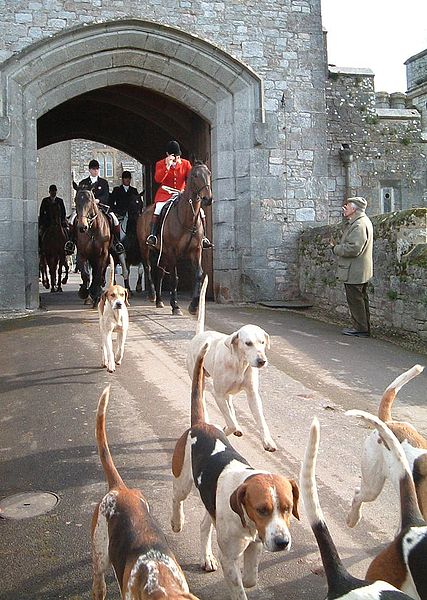
Australia to re-introduce Knighthoods, Lords and Barons: will create jobs helping rich people go fox-hunting.
[Non-Australians may not know what this article is about. If puzzled, click here ]
Following the Prime Minister’s decision speed up the reintroduction of imperial honors, newly designated Lord Clive of Palmerston has announced that he will be providing thatched huts for any of his mining workers who currently are living in disused coal mines. The PM applauded Lord Palmerston
Wikimedia commons / Owain Davies
“We’re getting things done faster than a catholic priest with an altar boy,” the PM said. “The roll-outs of Lords and Barons won’t be like Labor’s NBN. We intend to have a Lord in every city and two Barons in every municipality by the end of the month.
“Lords will be people of impeccable credentials,” said the PM. “Oil industry entrepreneurs who exposed climate change fraud, journalists who have exposed fake aborigines, and manufacturers of the suppositories of all wisdom.
“In time, we’ll have a House of Lords to replace the senate,” said the PM. “The senate spent most of its time arguing about stuff no one really understood. Human rights or something. Our new House of Lords can be like the English one, and reintroduce fox hunting. That would give a boost to the farming industry, and give jobs to unemployed serfs who could help rich people on and off their horses. They could form groups and go into the bush beating drums to scare the foxes into the open. On top of that, there’ll be jobs for costume makers, ermine and sable farms, and work for decorative jewellers. After all, to give the nation the lift in spirits it needs, the scheme has to look right.”
Lord Palmerston agreed the plan would create jobs. “It will take at least three people full time to get me on and off my horse. And the new Baroness Gina Rheingold would probably need the same.”
The Institute of Public Affairs has estimated the new honors system could create 2.6 million new jobs in its first twelve months.
Australians will be familiar with a journalist named Andrew Bolt, who seems to have a “thing” about whether people of mixed Aboriginal Caucasian descent can truly claim to be aboriginals, or whether they just “discover” their aboriginality to get career advancement and grants that should be given to “real” aboriginals. He was taken to the Federal Court a couple of years ago for racial vilification, and lost.
Australia suffers a shortage of truly crazy politicians, compared to the US. But the US has 15 times more people than us. Australians, by various measures, are only half as religious as Americans, and we don’t have young-earth creationists here. No one much cares about a politician’s religious beliefs. The former PM, Julia Gillard, was an atheist, and most Australians couldn’t even be bothered to shrug their shoulders and say, “so what.” So I guess that puts us behind the eight ball. This is not surprising.
So could Andrew Bolt ever become Australia’s Sarah Palin? No.
Firstly, Sarah Palin once said that Putin might invade Crimea. This puts her on the same level as a genuine prophet of God, or people who say enough crazy things that one of them eventually turns out to be right, or people who pay other people to retrospectively create news clips and blog entries to prove they predicted things. (I don’t think she – or he -are in the last category, but I mention it for completeness.)
To my knowledge, Bolt has never predicted the invasion of one country by another. Also most of his early work appeared in print journals, and (unlike the internet) they are hard to retrospectively falsify. George Orwell got that bit wrong in ‘1984’.
Second, he doesn’t know how to field dress a moose, because we don’t have moose in Australia. This ability was touted by conservative commentators as a great point in favor of Palin being a real down-to-earth person when she was nominated for VP in 2008. No one talks about field dressing a kangaroo.
Third, Bolt has never been a state Governor and quit half way through his term of office. In fact I don’t think he’s been elected to anything. There have been some journalists who have run for public office (Maxine McKew, but she lost after one term.) But let’s be realistic. No political party wants a loose cannon in the Forecastle of the ship. They’d rather have him on the outside spaying it around than on the inside spraying it around.
Fourth, Bolt speaks in grammatically complete sentences. He’s need some serious dental anesthetics and some amphetamines at the same time to sound like Sarah.
So although some readers of the Herald Sun might wish otherwise, it’s never going to happen.
There’s more chance of Cardinal George Pell entering into a gay marriage and wanting to adopt kids than there is of Andrew Bolt being our next Deputy PM. Sorry. I just can’t see it But what about you? Do you think having someone like Bolt in public office would brighten up the landscape? Remember, HE wont have his finger anywhere near any launch codes. What do you reckon?


 Richard Snow Writer