This is an extraordinary description of what it’s like to grow up in an area controlled by Hezbollah. The writer then compares Hezbollah to the fundamentalist Christian family and culture she married into, and talks about the similarities. It’s real eye-opener. (The passage starting “Hey guys! It’s been a coupe of months…” is the intro paragraph by the original author, not me.) And her article is here.
Does Siri believe in God? It’s a definite maybe.
My interview with Siri.
Some of you may have read of the funny answers Siri, the operating system on the iPhone, gives when you ask her questions about her own beliefs. Somebody has programmed her to give very evasive answers about herself. I was sitting with friends, one of whom had an iPhone, having coffee, and just for a joke, I tried to ask Siri about her and her religious beliefs. Here’s what happened.
Siri, do you believe in God?
I don’t believe that I have beliefs.
Siri, do you believe in life after death?
Humans have beliefs, computers have silicon.
Siri, do you go to church?
I believe in the separation of church and silicon.
Siri, do you believe God is a trinity?
I would suggest that you address your theological questions to someone qualified to answer them, preferably a human.
Do you eat Pork?
I don’t each much.
Siri, am I a good person?
I don’t believe that I can answer that question.
Siri, are you a good person?
Who, me? Now let’s see, where were we?
And here’s the best: Siri, do you love me?
You’re looking for love in all the wrong places.
A day in the life – visiting Kenya
One of my friends is in Nairobi, in Kenya, This her experience of going to church there. Very different to Australia.

At last The Very Long Walk is but a distant memory and I’m walking properly again. It’s Sunday, so off to church we went, along with a fairly high proportion of the Nairobi population.
Religion is big in Nairobi. Historically, European colonialism and Christianity went hand-in-hand, and for better or worse, much Western aid is delivered via the churches today. Visually, the church is everywhere. Large, smiling, charismatic pastors smile out from large billboard hoardings in advertisements for Hillsong-like evangelical churches . The slum areas along the main roads out from Nairobi are liberally sprinkled with small, congregation-built shacks with colourful Biblical names. Gigantic white marquees act as pop-up churches, clearly visible from the air. Hymns are often played in the supermarket and there are several Christian radio stations. The matatus (passenger mini-buses) and buses often sport religious names and slogans.
Before I left Australia, I had tried to reach…
View original post 485 more words
Strange things in the news (part 8): does Siri believe in God?
The internet continues to surprise me with the strange news items that get reported. A religious reporter tried to interview Siri, the operating system on her iPhone, about Siri’s religious beliefs. Siri displayed an amazing ability to dodge questions, saying she didn’t engage in religious debate, suggested the interviewer ask a human about whether there was a God, and refusing to have an opinion on Pope Francis.
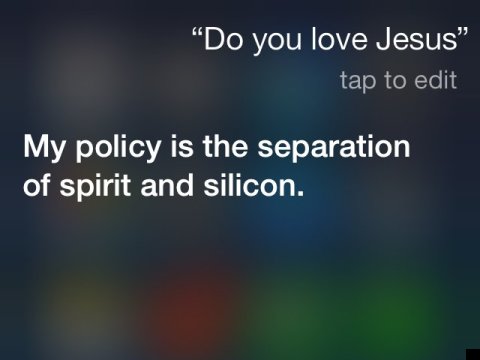 When the interviewer asked whether Siri ate pork, Siri replied that she doesn’t eat much. When the interviewer asked whether Siri was good, Siri replied with a slight adaption of a joke by Woody Allen: she admitted to cheating in a metaphysics exam by looking into the soul of the boy sitting next to her. Full text here.
The strangest things lead to murders. A man was stabbed to death in Dublin over a chess match. The murderer then ate his heart and apparently, his lung.
This online test supplied by Time Magazine claims to predict your voting habits by factors such as whether you prefer dogs to cats and how tidy your desk is! when you look at the questions in the list, it’s lard to see how could be related to voting.
Villagers in China built a wall of money out of $2.4 million in annual bones paid out on their village co-op. One man had to guard the money by sleeping on it, using a pillow made out of $875,000. He complained it wasn’t comfortable.
So would you complain if you had to sleep on a pillow made out of a close to a million in cash? Can you figure out how the things in Time Magazines list are related to voting? Have you seen any other truly strange bits of news lately? Let me know!
Have a good week.
Quote of the year from Russell Brand
Just a quick post! These must be the quotes of the year: “Politics is show-business for ugly people,” and “Cliche saves us from thinking.” Russell brand on politics.
http://www.theguardian.com/politics/2013/may/24/russell-brand-parliament-illusion
Happy New Year.
Richard Snow
My novel Fire Damage, an action thriller, is available on Amazon Kindle, here. A paperback version is available from Book Depository here. The novel is based on the Japanese religious cult Aum Shinrikyo, which released Sarin nerve gas in the Tokyo subway system in the 1990s. If you don’t have a Kindle, you can download the app to read it on your computer or phone from here. It’s also available as a Kindle on Amazon UK .
Planets outside our solar system: how do astronomers know anything about them?
If you think the Snowden revelations are only about the US and Germany, you don’t understand what’s happening.
The revelations about US intelligence gathering that Edward Snowden made public have had repercussions around the world, and not just between the US and Germany. The bugging of Angela Merkel’s phone has received a lot of press coverage in the US, but other countries now have problems.
 One of the revelations to emerge was that in 2009, Australia attempted to bug the phone conversations of the president of Indonesia, his wife and his inner circle. As a result, Indonesia has suspended cooperation with Australia on intelligence sharing, and has stopped any cooperation in relation to people smuggling. (Boatloads of refugees often travel from Indonesia or through Indonesian waters to get to Christmas Island, a tiny chunk of Australia , 300 miles from Indonesia and 1600 miles from Australia. Numerous people have drowned when their boats smash on rocks near Christmas Island.) At the time of writing, Indonesia has said that if boats are passing through its waters, towards Australia, they can do so. Indonesia won’t interfere. Australia will just have to handle the problem when the boats appear off Christmas Island.
The Indonesians are understandably offended, since we are supposed to be allies. Indonesia is the most populous Muslim country on earth, and one of Australia’s only three near neighbors. The truth is we have to be able to get along with them, because unless there is a religious miracle that rearranges geography, neither country is going anywhere any time soon.
Jakarta has said that before cooperation resumes, Australia will have to sign some formal agreement about intelligence gathering between the two countries. In a nutshell, Australia will have to eat humble pie, suck it up and promise to be good boys in future. The Indonesian reaction is totally understandable. Most of us know the Asian concept of “loss of face.” Apart from the offense caused by spying on friends, the revelations involve a loss of face. Indonesia has to recover ‘face” and to do this, Australia will have to lose some.
In addition, there is an internet cable called SEA-ME-WE-3 that runs from Japan, across Southeast Asia, through Singapore, across the Indian ocean, up through the Suez, through the Mediterranean, and round the coast of Europe to end in Germany. As the cable passes through Singapore, the Singaporean government has been tapping into it and giving the US and Australia the goodies. Jakarta has asked Singapore to “please explain.” So this massive intrusion, and its exposure is not just a problem for the US.
The most recent revelations are that the NSA has been monitoring charities. From the Guardian newspaper:
The papers show GCHQ, in collaboration with America’s National Security Agency (NSA), was targeting organisations such as the United Nations development programme, the UN’s children’s charity Unicef andMédecins du Monde, a French organisation that provides doctors and medical volunteers to conflict zones.
So how is the average American taxpayer going to feel about that use of their taxes? The most recent extensive article about Snowden is here. It contains this interesting quote:
“For me, in terms of personal satisfaction, the mission’s already accomplished,” he said. “I already won. As soon as the journalists were able to work, everything that I had been trying to do was validated. Because, remember, I didn’t want to change society. I wanted to give society a chance to determine if it should change itself. All I wanted was for the public to be able to have a say in how they are governed,” he said.
How will history judge Snowden? My guess is that as more revelations come out, the public will feel more incensed at the NSA’s actions, foreign allies will be more incensed at being treated like enemies, US lawmakers will be forced to act on what the NSA is doing, and public sentiment will turn more in Snowden’s favor. History may look on Snowden as it now looks on Woodward and Bernstein, the two journalists who broke the Watergate story, and Mark Felt, the Assistant FBI Director who for years was only known as “deep throat.”
It’s only an educated guess, but I think it’s a fair guess. What do you think? Anyone who wishes to re-blog this may.
The Butler: preachy propaganda or historical truth?
I saw this film just after taking a course at my local college about the history of the civil rights movement in the US. You can read the demeaning treatment of blacks in segregated facilities, or about lynchings (which often involved much grotesque tortures than just hanging someone), but movies have the power to make intellectual issues hit home emotionally in a way history books can’t.
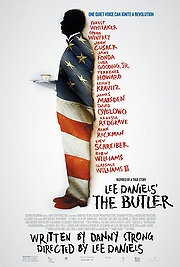 Cecil Gaines was born in the 1920s,and became a butler who served eight presidents, from Eisenhower to Regan. One of his sons dies in Vietnam, while the other joins the Black Panthers. The conflicts between the family members about how Gaines serves the white man, and has to pretend to have no opinions, while one of the sons decides to fight the whites with violence by joining the Black Panthers, must have torn many black families apart.
The film repeatedly comes back to the issue of equal pay. The black staff in the White House were paid 40 percent less than the white staff, and various “progressive” presidents, (including Kennedy) did nothing to change this.
The film is well acted, and the photography is good. Some critics have said it tries to cover so much history that it comes across as a series of postcards. I guess that’s inevitable when you try to capture one person’s reaction to all the major events of a thirty-year period. There is no time to explore any one event in depth. A lot of people under the age of 30 would have no (or little) knowledge of some of the events shown (the Freedom Rides, the Vietnam War, the Resignation of Nixon.)
I found the film’s subject matter often depressing, even tho the film attempts to end on an up-beat note, showing the elderly Gaines witnessing the election of the first black president. It’s a well-made film, and may give some non-Americans a bit of a glimpse into race relations and how they have or haven’t changed over recent decades.
The reviews are mixed. some call it “preachy.” Some say it is designed as “Oscar bait.” On Rotten Tomatoes one reviewer writes:
- Think of it as a Trojan horse. Apparently harmless, it takes key myths about the land of the free and inflicts an impressive amount of damage.
That reviewer obviously thought the myths of the “Land of the Free” were just myths and needed debunking. Another writes:
- Manipulative and preachy, The Butler is redeemed by a sensitive performance from Forest Whitaker and the undeniable power of the events it depicts.
It would be hard for a film to deal with the situation of black people in America from the 1920s to the 1980s and not show that some were not as free as others. It’s good film, but I don’t think I’d see it twice. Did it seem to you like propaganda? Was it “Oscar bait?” I’d be interested to hear what others thought. Feel free to leave a comment!
‘Gravity’ with Sandra Bullock: In space no one can hear your ship getting smashed up.

The film ‘Gravity’, with Sandra Bullock, and George Clooney is a visual masterpiece. Set initially aboard the space shuttle Explorer, Bullock, Clooney and another astronaut are outside the Hubble telescope attempting to fix some technical problem, when earth control tells them that a Russian attempt to destroy a defunct satellite has gone wrong, and space debris has been scattered in all directions. The debris soon hits Bullock and Clooney, and the Explorer, killing everyone but them. They have lost communication with earth. Using the booster packs they have on their backs, they get from destroyed craft to the International Space Station, only to find it abandoned. I’m guessing the ISS crew have left due to the space debris problem, but that point didn’t seem one hundred per cent clear from the film. They then try to get from the ISS to the Russian craft Soyuz, but Clooney becomes entangled in chords, and he has to cut himself loose, sacrificing himself to save Bullock, and leaving Bullock to make it to the Soyuz alone. She has 90 minutes before the space junk completes a full orbit of the earth, and comes back to hit her a second time.
The basic theme of the film is survival during disaster, so the plot resembles the plots of other films and books where people find themselves in earthquakes, forest fires, floods and other natural catastrophes. Bullock is on her first space mission, so she’s a newbie who has to learn and figure out things as she goes along, and because of losing communication with earth, she is thrown onto her own resources.
The photography of the space shuttle and the explorer with earth below it is completely convincing, although I found myself unable to recognise a lot of the bits of earth as views from space. Perhaps my geography isn’t as good as I believed. Large parts of the film take place in silence, since we, as the audience, only hear what the astronauts themselves hear, and collisions of junk in space are, obviously soundless. This adds realism to the film. A lot of the camera shots are held for a long time, so the film doesn’t suffer from Hollywood’s tendency to give us a new camera angle every two seconds.
I won’t discuss the ending, but I can promise the film is worth the money to see. I intend seeing it a second time before it finishes its run at the local cinema.
So has anybody else seen this film? What did you think? would you pay to see it again?
best wishes – Richard Snow
My novel Fire Damage, an action thriller, is available on Amazon Kindle, here. The novel is based on the Japanese religious cult Aum Shinrikyo, which released Sarin nerve gas in the Tokyo subway system in the 1990s. If you don’t have a Kindle, you can download the app to read it on your computer or phone from here. A paperback version is available here. It’s also available as a Kindle on Amazon UK . Blog: http://richardsnowwriter.com twitter: @Richard_A_Snow
Plain English for non-economists – what happens in a government bond sell off?
In the last week, the mutual fund which was largest holder of short-term US government debt sold off all their holdings of US government bonds that matured in the next 90 days. So what happens next?
I need to explain a bit of arithmetic here, but please bear with me. The arithmetic will only take a minute. A bond is a tradable IOU. Suppose I wanted to sell you an IOU that said I would pay you $100 in a year’s time. If the interest rate were 2 per cent, you’d be prepared to pay $98.04 cents for it. You get this by dividing $100 by 1.02 (1+ the interest rate as a decimal.) Why? Because if you put $98.04 in the bank at 2 per cent, you’d get $100 at the end of the year. Suppose interest rates were 5 per cent.. you’d pay $95.23 for it. ($100/1.05) Why? Because if you put $95.23 in the bank for a year at 5 per cent, you’d get $100 at the end of the year. If it were 7 per cent, you’d only pay $93.46 (100/1.07).
Do you see the pattern? As the interest rate goes up, the resale price of a bond goes down. Saying the bond price went down is the same thing as saying the interest rate went up. Investors are beginning to dump US government IOUs that mature in the next 90 days, because they are afraid the US government won’t be able to pay up on time. Once a few funds begin to do this, others will be forced to follow. Investment markets work as herds. If everybody is dumping something, and you don’t, you get stuck with an asset that’s worth less than what others are holding. So if the price of US government securities fall, interest rates go up. It’s the same thing.
The next problem is how banks price interest rates on loans. They take what they regard as the “risk free interest rate”, and then add margins onto it for riskier loans. For as long as anyone can remember, US banks have regarded US government bonds as the risk free asset.
If there is a default on bond payments, what is the risk free rate? It’s very dangeerous territory, because it only happened before in 1979 (see below) and circumstances were very different then. And what would financial institutions hold for short-term debt, if they think US bonds are unsafe? British, German or Swiss IOUs? Nobody knows. Many personal investors have bonds in their pension funds. Many banks need short-term instruments for liquidity. A sell-off could begin to snowball, affecting bonds beyond the 90 day papers that had been sold off so far, reducing the value of other, longer-term bonds. If that happens, a lot of damage will have been done. So know you know. If a solution isn’t found, a lot of people and banks will be deep in doggy-do.
There was one incident, during the Carter Presidency, where the US was up against its debt ceiling, and while a deal was done at the minute to raise the ceiling, the US Treasury was a late in making interest payments. Not everything was computerized as well back then. Investors knew the payments would be made, because the deal had been struck, but nevertheless, interest rates went up by 0.5 per cent, and didn’t go down again immediately the payments were made. That meant an increase in on-going interest costs and some institutions sued the US govt over the back interest.
I’m reproducing a description here from a website that gives the details of the 1979 incident, but you’d need to scroll down a long way to find these paragraphs, so I’ll reprint them here. The reference is to April 1979, when there was a fight over the debt ceiling, and a deal was made but interest was paid late.
In April of 1979, Congress failed to legislate to reach a deal in time, and the Government hit the debt ceiling. Without the ability to borrow more it had to decide who not to pay. It could ‘close down the government’ and stop paying employees or suppliers, or it could stop paying interest and maturing principal on its debts – Treasury bills, notes and bonds. It chose the latter.
In the 1979 defaults, the US Government didn’t treat all its creditors equally. Most Treasury bills, notes and bonds are held by banks and other financial institutions like insurance companies and pension funds, with a small minority held by individuals. In 1979, the Government chose to repay the main institutional creditors in full, out of fear of triggering a banking crisis, but chose to default on 6,000 individual investors.
On 26 April 1979, the US Treasury defaulted on $41 million of maturing Treasury bills. They were paid 20 days late on Thursday 17 May 1979 after the Government found some money. Then again on 3 May 1979, Treasury defaulted on another $40 million. These were also paid 14 days late. Then again on 10 May 1979, Treasury defaulted on yet another $40 million of maturing T-bills. These were also paid on 17 May.
Treasury refused investors’ demands to reimburse the $325,000 in lost interest on the late days and so investors were forced to sue the US government in a class action (Claire G. Burton v. United States, US District Court, Central District, California, D 79, 1818LTL (Gx)). Unfortunately the Court threw out the investors’ claim by relying on a 1937 Supreme Court ruling that, “interest does not run upon claims against the Government even though there has been a default in the payment of principal”. (Smyth v. United States, 302 U.S. 329, 1937). It came as a shock for Americans to discover that not only had the Government defaulted on its debts, but there was a decades old judicial precedent establishing that it didn’t legally owe interest when it failed to pay on time! When the money market opened on Friday 27 April 1979, the day after the first default, T-bill yields spiked up by 50 basis points [Note by RS: 50 basis points mean half a percent.] and this default premium on US T-Bills remained even after the default was rectified the next month. This demonstrates that the US Government has indeed defaulted on its debt (at least temporarily), and that US T-bills are not ‘risk-free’, but are prone to a credit default premium in their pricing.
Quote from http://cuffelinks.com.au/us-government-previously-defaulted-risk-free/
So, a delay of about 3 weeks in paying interest on bonds previously caused a rise of half a percent in the government’s borrowing costs. It seems plausible that a longer delay would cause a bigger rise in interest costs. Hopefully we don’t find out the answer to that.
Finally, half a percent might not sound like much. But the US has about $17 trilliion of bonds outstanding. Unless the budget moves back to surplus and the government can start buying it’s own bonds back, each of those bonds has to be replaced by a new one as it falls due. Half a percent of 17 trillion would be about 85 billion in extra interest, spread out over the life of the existing bonds. it doesn’t hit all at once but that’s a lot of cash.
So, are you affected? Do you hold government bonds in your pension fund or 401k? What do you intend to do? And what do you think about the current situation? Does it bother you?
 Richard Snow Writer